Planetary
Pingos and Permafrost
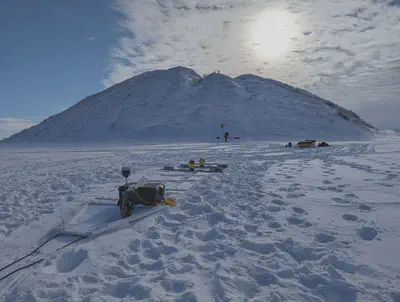
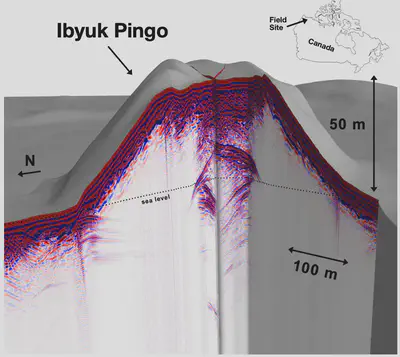
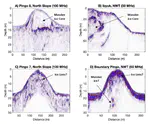
A pingo is a large ice-cored hill or mound that forms in permafrost regions, creating distinctive dome-shaped landforms that can reach heights of 3 to 70 meters and diameters of up to several hundred meters.
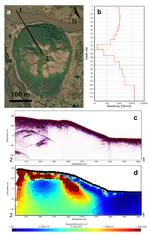
There are two main types of pingos based on how they form. Hydrostatic (closed-system) pingos, also called Mackenzie-type pingos after their abundance in Canada’s Mackenzie Delta, form when lakes drain or shallow water bodies fill in. The ground beneath the former lake refreezes, but a pocket of unfrozen saturated sediment (talik) remains trapped beneath. As permafrost encroaches from all sides, it compresses this trapped water, increasing pore pressure and forcing water upward. This water then freezes, creating an expanding ice core that heaves the surface.
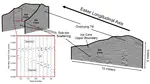
Hydraulic (open-system) pingos, or East Greenland-type, form where groundwater under artesian pressure moves through taliks beneath or within permafrost. When this pressurized water reaches the surface or near-surface, it freezes and accumulates as an ice core. These often form on slopes or valley bottoms where groundwater can flow from higher elevations.